
Bowl Basics: Easy, Everyday Templates That Work Every Time
Bowls are one of the most practical ways to cook for real life. They take what you already have - grains, beans, vegetables, leftovers, sauces - and turn it into something balanced and satisfying without starting from scratch every time. You’ll learn how to create endlessly adaptable meals that are balanced, colorful, and full of flavor. We’ll walk through this simple template for mixing grains, proteins, vegetables, and sauces so you can build satisfying dishes.
This is the system I come back to in my own kitchen and the one I teach most often in employee wellness settings because it lowers friction. Once people see the pattern, they stop asking “what do I make?” and start asking “what do I have?”
The template is simple:
Grain + Protein + Vegetables + Sauce/Dressing + Something crunchy and/or bright
Everything below is designed to plug into that structure. They’re all variations.
The point is not memorizing bowls. It is recognizing that once you understand the structure (or grammar), you can cook from what is already in your kitchen (and understand how to better stock your kitchen) without starting over every time.
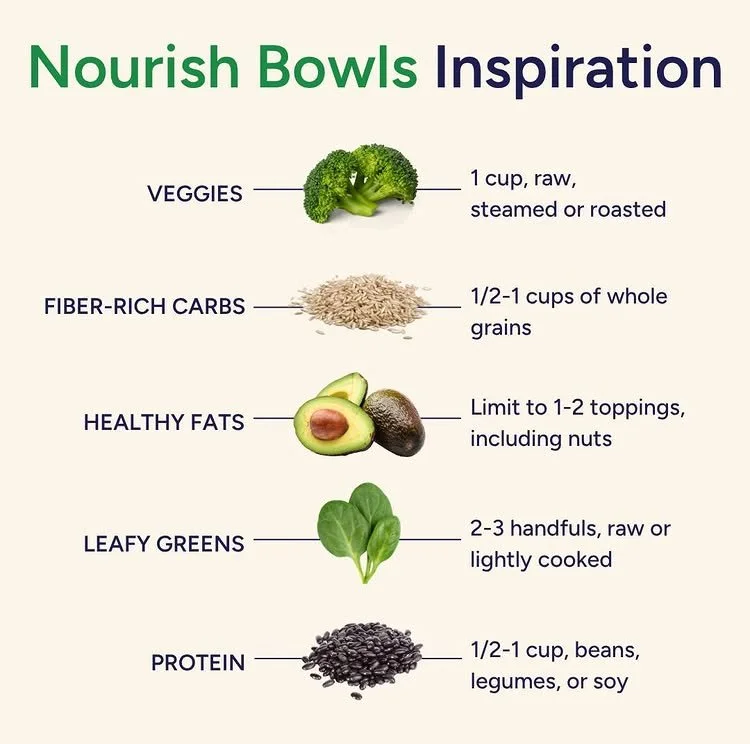
Here’s a infographic from the American College of Lifestyle Medicine that spells it out clearly. They include “leafy greens” as a category and not “sauces” or “something crunchy or bright” but that’s fine! They’re all variations on a theme. And if you think about it, often times the something crunchy is nuts or seeds which are healthy fats and sauces often contain healthy fats.
Here are some specific examples that include ingredients that add flavors and texture to make the meal sing!
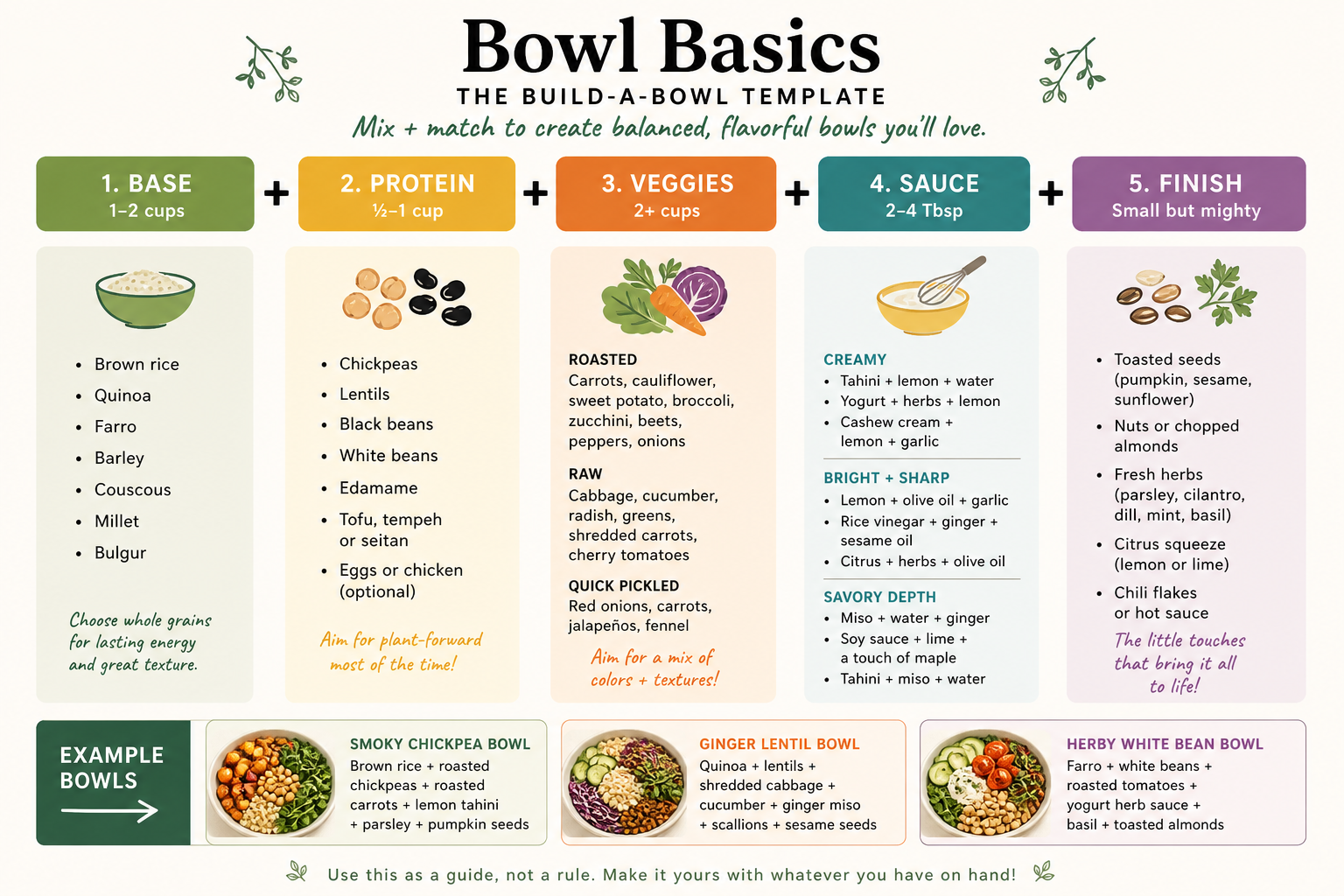
Here it is in a different format!
Bowl Basics: The Build-A-Bowl Template
A simple way to build balanced, flexible grain + bean bowls using what you already have in your kitchen.
The Core Formula
Grain + Protein + Vegetables + Sauce + Finish = a complete meal
1. Base (1–2 cups)
- Brown rice
- Quinoa
- Farro
- Barley
- Couscous
2. Protein (½–1 cup)
- Chickpeas
- Lentils
- Black beans
- White beans
- Tofu, eggs, or chicken (optional)
3. Vegetables (2+ cups)
Think mix of textures:
- Roasted (carrots, cauliflower, sweet potato)
- Raw (cabbage, cucumber, radish)
- Quick pickled (onions, carrots)
4. Sauce (2–4 tablespoons)
Creamy
- Tahini + lemon + water
- Yogurt + herbs + lemon
Bright + Sharp
- Lemon + olive oil + garlic
- Rice vinegar + ginger + sesame oil
Savory Depth
- Miso + water + ginger
- Soy sauce + lime + a touch of maple
5. Finish (small but important)
- Toasted seeds or nuts
- Fresh herbs (parsley, cilantro, dill, mint)
- Citrus squeeze (lemon or lime)
- Chili flakes or hot sauce
Example Bowls
- Brown rice + chickpeas + roasted carrots + lemon tahini + parsley + pumpkin seeds
- Quinoa + lentils + cabbage + ginger miso + sesame seeds + scallions
- Farro + white beans + roasted tomatoes + herby yogurt + almonds + basil
The goal is not recipes you memorize. It’s a system you can build from, again and again, using what’s already in your kitchen.
Bowl 1: Smoky Chickpea + Roasted Vegetable Bowl with Lemon Tahini
This is the bowl I reach for when I want something steady and grounding but still full of brightness. The chickpeas roast until they take on a little chew and edge, while the vegetables soften and concentrate. The lemon tahini pulls everything together without needing much else. Any sturdy vegetable works here. Any grain works here. The structure holds.
Components
Grain
Quinoa or farro
Protein
Roasted smoky chickpeas
Toss canned chickpeas with olive oil, smoked paprika, garlic powder, salt (dry the chickpeas with a clean dishtowel first)
Roast at 425°F until crispy
Vegetables
Roasted carrots, cauliflower, or sweet potato
Olive oil, salt, cumin if you want warmth
Sauce/Dressing
Lemon tahini
Tahini + lemon juice + garlic + water + salt until pourable
Finish
Chopped parsley and/or dill
Pumpkin seeds or toasted sunflower seeds
Bowl 2: Ginger Miso Tofu Bowl with Cabbage and Crisp Cucumber
Tofu carries flavor well, which makes it ideal for meal prep or flexible cooking. The ginger miso dressing is sharp but balanced, and it wakes everything up without overpowering it. This is the kind of bowl that improves on day two, which is why I use it so often in classes where people are thinking about plan ahead lunches.
Components
Grain
Brown rice or soba noodles
Protein
Tofu
Vegetables
Shredded cabbage
Thin cucumber slices
Sauce/Dressing
Ginger miso dressing
White miso + grated ginger + rice vinegar + sesame oil + water to thin
Finish
Sesame seeds
Chopped scallions
A squeeze of lime
Bowl 3: Herby White Bean + Roasted Tomato Bowl with Yogurt Sauce or Lemon Vinaigrette
This bowl leans Mediterranean in feel but stays very flexible. It is built on pantry staples - white beans, grains, yogurt - and whatever tomatoes or seasonal vegetables are around. Roasting the tomatoes is optional if you’d like to concentrate them for a stronger flavor.
Components
Grain
Farro, quinoa, or barley
Protein
White beans (cannellini, navy, gigande, Brami lupini)
Vegetables
Roasted or raw cherry tomatoes
Optional: roasted zucchini or eggplant
Sauce/Dressing
Herby yogurt sauce or lemon vinaigrette
(Plain yogurt) + lemon juice and zest + olive oil + chopped dill or mint + salt
Finish
Toasted almonds or pine nuts
Fresh basil, mint, dill and/or parsley